The story
A baby born too early can develop a condition most parents have never heard of: Retinopathy of Prematurity (ROP) — abnormal blood vessel growth in the retina that can cause permanent blindness within weeks if it isn’t caught in time.
The tragedy is that ROP is almost entirely preventable — if a baby is screened early enough, and treated with a simple laser procedure, their sight can be saved.
The problem is access. India has only about 150 vitreo-retina specialists trained to diagnose and treat ROP, for a country of over a billion people. Nearly all of them practice in major cities. For a premature baby born in a village in rural Tamil Nadu or Andhra Pradesh, the nearest specialist might be hours away — and a baby with ROP can go blind in the time it takes to arrange that trip.
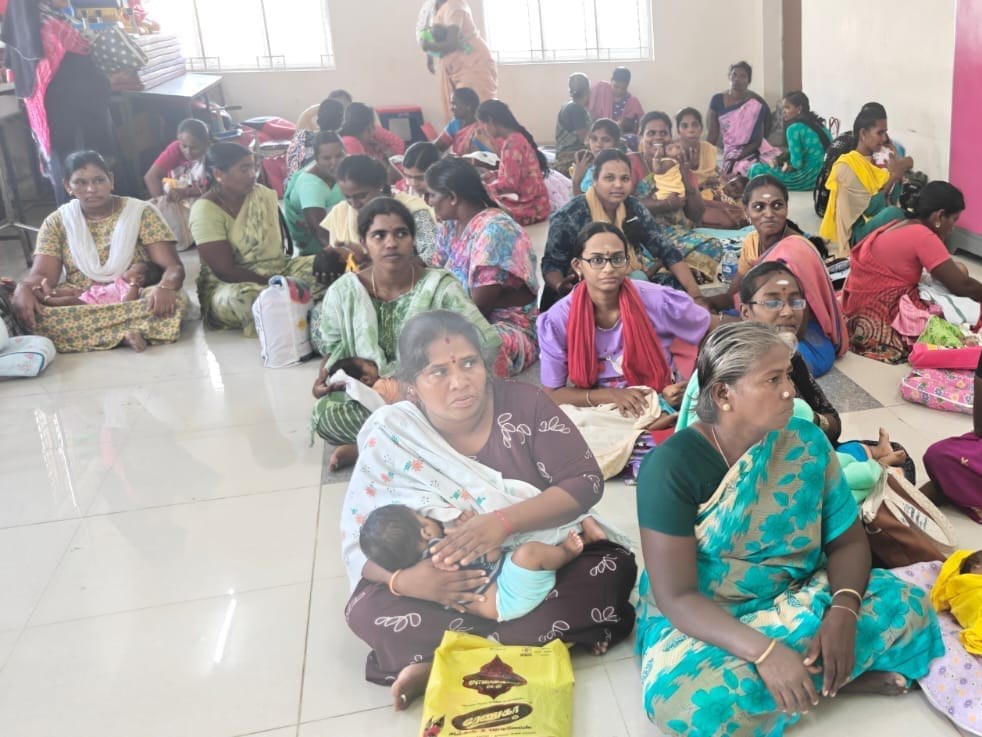
Gurupriya Vision Research Foundation (GVRF), the philanthropic arm of Radhatri Nethralaya eye hospital in Chennai, built a solution: Vision on Wheels. Since its founder first began treating ROP in 2000 and launched this program in June 2018, GVRF’s mobile teleophthalmology units have traveled directly to rural hospitals and villages, bringing the screening to the baby instead of asking an already-stretched family to find their way to Chennai.
- 01A trained technician places a portable retinal camera over the infant’s eye.
- 02The image is captured and read by specialists trained specifically to detect ROP.
- 03Because the disease can progress quickly and unpredictably, each baby typically needs 3 to 4 screening visits over several weeks before they can be safely declared out of risk.
- 04If a baby is found to be at risk, GVRF arranges and funds their transport to Chennai for free laser treatment — the procedure that stops the bleeding and saves their sight.
- •Screening visits for premature babies across rural Tamil Nadu and Andhra Pradesh
- •Transport to Chennai for babies found to be at risk
- •Free laser treatment for babies who need it
Our goal is $14,000. Based on typical costs for this kind of rural screening and treatment outreach in India, we estimate this could fully screen and monitor somewhere in the range of 15–30 premature babies through their entire at-risk window (all follow-up visits included), plus cover transport and laser treatment for those who need it. This is an estimate, not a precise count.
Your contribution gives a baby born too soon a fighting chance to keep something most of us take for granted: their sight.